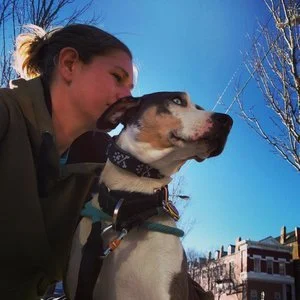
Follow me please
A must have for control off leash!
What you Need:
med -> high level treats
20-50 ft long line unless in a fenced area
second or "ghost" handler if possible
Goal:
To have the dog follow the handler and ignore the environment
*Note* The second handler is there to make sure that the dog remains safe, to tell the handler when to hide and when to reappear.
Begin with your pup by your side - position (sit, down, stand) is not important, the pup should be still. It is best if you wait for the pup to offer eye contact, but you may cue it. This provides the connection between you and your pup. Now you're ready to get going. Pick a point in front of you, cue your pup to "let's go" and begin walking. Here's the hard part! Don't beg, look at, or otherwise cue your pup. You may praise and treat him if he's by your side. Trust me you'll "feel" him next to you. Is he still with you? Yes! Great! Mark, reward, and change direction. Do this often to try to lose your pup.
Did you lose him? He not following you? Don't fret! Keep walking, fight the urge to beg, and find a place to hide. Your ghost handler will make sure puppy is safe. You may keep your head in sight, just keep quiet. Let your pup figure out that he lost you. Let him fret a bit. Did he finally notice you ditched him? Is he searching? Good! Now you may step out and call him. Praise that good puppy! He'd better keep an eye on you, you may just leave him! Sneaky human!
Begin the exercise again. As your dog becomes proficient you can make it harder by adding toys or strangers or other dogs.
*If you add dogs make sure the distraction dog does not reciprocate advances to play. This dog is for distraction only. Same goes for the humans.*
Take this show on road! The more places you practice the better.
Frequently Asked Questions
About Teaching A Dog To Follow You
-
A dog who naturally checks in and follows their handler is easier to guide through changing environments. The goal is to build awareness of where you are rather than requiring constant verbal reminders.
-
Begin somewhere quiet where your dog can succeed. Reward voluntary eye contact, following your movement, and choosing to stay near you. As those habits improve, gradually practice around more interesting environments and distractions.
-
Usually not. Repeating cues can teach a dog that the first cue is optional. Instead, practice in an environment where your dog can succeed and reward them frequently for noticing changes in your direction and choosing to follow.
-
No. A long line or securely fenced area allows you to practice movement, check-ins, and recall without taking unnecessary risks. Dogs should not be given off-leash freedom in unsecured areas before they have reliable skills around real-world distractions.
-
They can be one part of it. Reliable off-leash behavior also requires a strong recall, environmental awareness, impulse control, appropriate reinforcement, and extensive practice around gradually increasing distractions.