You drop your dog off in the morning.
You go to work.
You pick them up at the end of the day.
Dog daycare and day training can look pretty similar from the parking lot.
Inside, however, they should be doing very different things.
Traditional dog daycare is primarily a care and social outlet. Day training is a structured dog training program designed to teach skills, improve behavior, and help dogs navigate everyday situations.
Both can be useful. Both can be appropriate for the right dog. But they are not interchangeable.
And if your goal is to change your dog's behavior rather than simply keep them occupied during the day, understanding the difference matters.
What Is the Difference Between Dog Daycare and Day Training?
The biggest difference between dog daycare and day training is the purpose of the program.
Dog daycare focuses on supervised care, activity, and often social interaction. Day training focuses on teaching and practicing specific behaviors under the guidance of professional dog trainers.
Here's how they generally compare
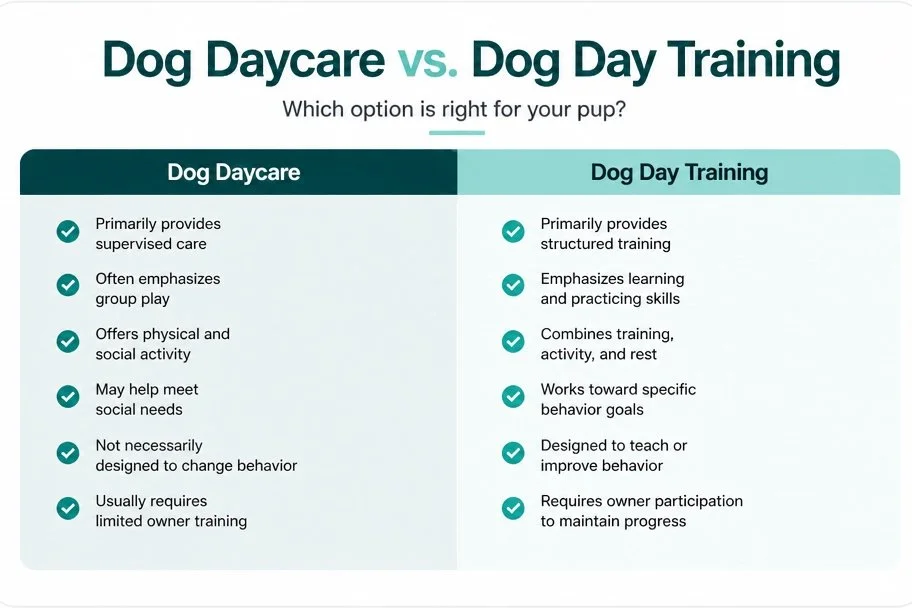
Neither option is automatically better. The right choice depends on your dog and what you want them to accomplish.
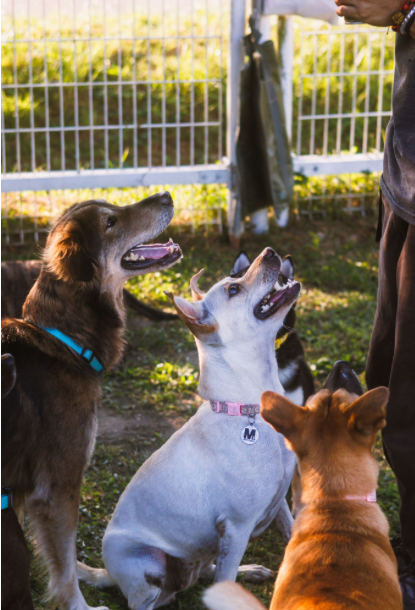
What Is Dog Daycare?
Traditional dog daycare is generally straightforward.
Your dog has somewhere supervised to spend the day, often with opportunities to play and interact with other dogs.
For an appropriately social dog who genuinely enjoys group play, daycare can provide exercise, interaction, and something to do while their owner is busy.
And there's nothing wrong with that. Not every activity your dog participates in needs to be educational. Sometimes dogs can just have fun.
But you shouldn't expect daycare to automatically teach your dog to walk politely on a leash, respond around distractions, settle at a restaurant, stop jumping on guests, or come when called.
Those are training goals.
Some daycare facilities offer training as an additional service, so ask what's included rather than assuming every program operates the same way.

What Is Dog Day Training?
Day training—what we call Day School at Canine Sports—is different because your dog's day is intentionally structured around learning.
Your dog still gets dropped off and picked up. But during the day, professional trainers work with your dog on specific skills and behaviors.
Depending on the dog's needs, that might include:
Loose-leash walking and leash manners
Engagement and responsiveness to the handler
Recall and coming when called
Polite greetings with people
Impulse control
Settling and relaxation
Confidence in new environments
Remaining calm around other dogs
Managing real-world distractions
Applying familiar skills outside a quiet training room
The dog isn't simply being supervised while you work. They're attending school. And yes, much like human school, sometimes recess is included. But recess is not the curriculum.
A Tired Dog and a Trained Dog Are Not the Same Thing
This is probably the biggest distinction. A dog can come home from daycare completely exhausted. That may feel wonderful.
They eat dinner, collapse on the couch, and you think, "This is amazing." And for that evening, it may be.
But physical exhaustion does not automatically change behavior. Your dog may sleep for six hours and wake up tomorrow still pulling on the leash. They may still jump on Grandma. They may still bark and lunge when they see another dog. They may still have no idea how to settle when exciting things are happening.
Exercise is valuable. Social outlets can be valuable.
But if the problem is training, tiring your dog out isn't the same as teaching them what to do.
Day training approaches the situation differently. Rather than simply providing activity, trainers help dogs practice the behaviors they'll need in everyday life.
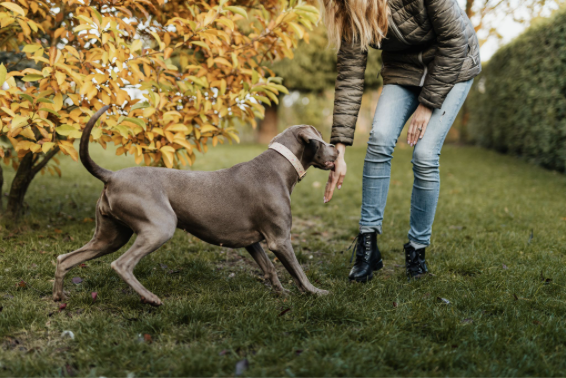
More Exercise Isn't Always the Answer
Another issue we see with high-energy dogs is this. Owners understandably think: "My dog has tons of energy. They need more exercise."
So the dog gets more running. More play. More daycare. More activity. And sometimes you accidentally create an incredibly athletic dog who still has no idea how to relax.
Congratulations. You now have an endurance athlete living in your house.
Dogs need appropriate physical outlets. But they also need rest, mental enrichment, and opportunities to learn how to settle.
Some dogs become increasingly excited or overstimulated when their days are packed with nonstop activity. A dog who is constantly looking for the next exciting thing may struggle when nothing is happening.
That's why teaching calm behavior matters.
Your dog can learn to wait, settle on a mat, remain relaxed while other dogs move nearby, and engage with you instead of reacting to every distraction. These skills don't develop automatically just because a dog spent the day running.
They need to be practiced.

Not Every Dog Enjoys Daycare
Dog daycare is often treated like something every dog should love. They don't.
Some dogs genuinely enjoy large-group social interaction. Some prefer a couple of familiar dogs. Some tolerate daycare but aren't particularly thrilled. Some find it overwhelming.
And some should not be placed in large, free-play groups at all.
Dogs have individual personalities, social preferences, and comfort levels.
A dog who doesn't enjoy daycare isn't necessarily poorly socialized.
In fact, being comfortable around other dogs doesn't mean your dog needs to play with every dog they encounter.
For some dogs, the better goal is learning to remain calm when other dogs are nearby.
Your dog doesn't need to be friends with every dog to have good social skills.
A well-run daycare should assess whether group play is appropriate, monitor interactions, and provide breaks rather than assuming that more play is always better.
Day Training Doesn't Mean Eight Hours of Commands
Nobody wants that. Including your dog. Learning requires rest.
A well-structured day-training program should balance focused training sessions with enrichment, movement, downtime, and opportunities for the dog to process what it's learning.
Training sessions themselves may be relatively short. The benefit comes from repetition throughout the day.
Instead of practicing loose-leash walking for an hour until everyone hates walking, your dog might have several focused opportunities to practice the skill at different times.
They may work on settling after an activity, practice responding to a handler around distractions, or learn to wait calmly before going through a doorway. These are small lessons that build toward larger behavior goals.
What Happens Around Other Dogs?
This is another major difference between dog daycare and day training.
In a traditional daycare environment, other dogs may be the activity. In day training, other dogs can also become part of the lesson.
Your dog may practice walking past another dog without pulling. Settling while another dog works nearby. Maintaining engagement instead of immediately trying to play. Waiting calmly before an interaction.Playing appropriately and then disengaging when asked.
That distinction is important. The goal isn't simply teaching your dog how to play with other dogs. It's also teaching them how to exist around other dogs without needing to interact.
For Chicago dogs, that's an incredibly practical skill.
Think about walking down a busy sidewalk, passing another dog outside a coffee shop, or waiting near other dogs at a veterinary office. Your dog doesn't need to greet every dog they see. They need to learn how to navigate those situations appropriately.
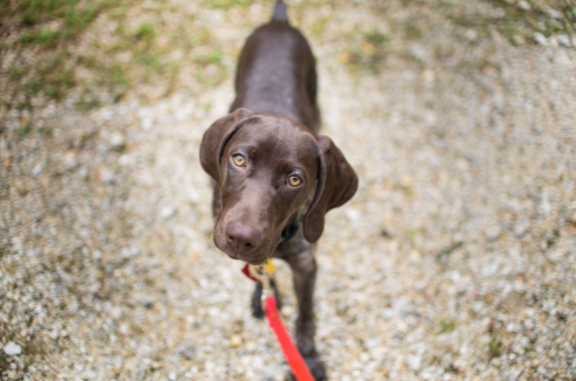
Is Day Training Good for Puppies?
Puppies can benefit from structured day training, especially when owners want help establishing good habits early.
Puppy training may focus on basic cues, leash foundations, polite greetings, confidence building, appropriate social experiences, and learning to settle.
These skills become increasingly important as a puppy grows into adolescence.
That said, puppies have different developmental and physical needs than adult dogs. Training should be age-appropriate and include adequate rest.
Socialization is also about much more than playing with other puppies.
Puppies benefit from positive, carefully managed experiences with different people, environments, sounds, and situations.
The American Veterinary Society of Animal Behavior's guidance on puppy socialization emphasizes the importance of early, positive experiences in supporting behavioral development.
A good puppy training program should help build confidence and useful skills without overwhelming the puppy.
Can Day Training Help Reactive Dogs?
This depends heavily on the individual dog.
Some dogs with mild reactivity, overexcitement, confidence issues, or poor impulse control may benefit from an appropriately structured day-training program.
For example, a dog who becomes overly excited around other dogs may need practice noticing another dog without immediately pulling toward them.
A fearful dog may need carefully controlled experiences that help them feel safer around unfamiliar situations.
Other dogs need more individualized behavior work before they can safely participate in a group training environment.
Reactivity can have different underlying causes, including fear, frustration, and excitement. The appropriate training approach depends on what's driving the behavior.
This is why assessment matters.
A reputable program should be willing to tell you: "This isn't the right program for your dog yet." Matching the dog to the right environment is more important than filling a spot.
For serious aggression, significant fear, or other safety concerns, veterinary and qualified behavior-professional guidance may be needed.
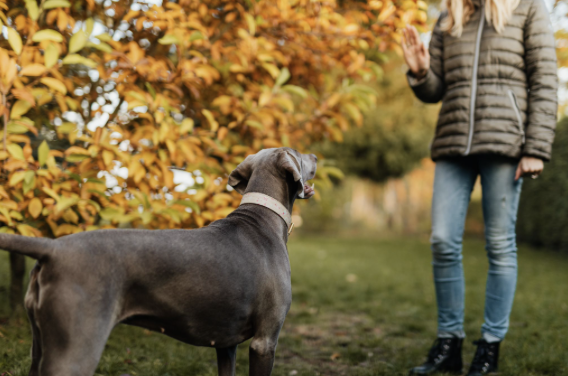
Why Owner Involvement Matters
Here's the catch with every professional dog training program.
We can train your dog. We cannot secretly turn you into us while you're at work. Eventually, the dog comes home. That's why owner involvement matters.
If trainers spend all week teaching a dog that pulling doesn't get them where they want to go, and the owner spends the weekend being dragged down the sidewalk, the dog is receiving two different sets of rules.
Dogs need opportunities to practice their skills with the people who actually live with them.
That means owners need to understand what their dog has learned, which cues are being used, how to respond when things go wrong, and how to practice consistently at home.
At Canine Sports, our Day School programs include communication about what the dog is learning, owner instruction, and at-home practice.
Because the goal isn't for your dog to behave beautifully for the trainer. The goal is to make life with your dog easier.
Who Is Dog Daycare Best For?
Traditional dog daycare may be a good choice for a dog who genuinely enjoys social play, is comfortable in a group setting, and benefits from supervised care while their owner is away. It can also help owners who want to give their dogs an extra social or physical outlet.
The key is choosing a daycare that fits your dog's temperament and needs.
Ask how dogs are grouped, how interactions are supervised, whether rest breaks are provided, and what happens when a dog becomes overwhelmed. A dog who loves daycare may get considerable enjoyment from the experience. Just remember that enjoyment and training progress are two different goals.
Who Is Dog Day Training Best For?
Day training may be a better fit if you find yourself saying:
"My dog pulls so hard that walks are miserable."
"My puppy needs training, but I don't have enough time during the workweek."
"My adolescent dog knows everything until we leave the house."
"My dog loses their mind around other dogs."
"I want professional help, but I don't want my dog staying somewhere overnight."
"We've taken a training class, but we need more repetition."
These are situations where professional training throughout the day may help.
Instead of relying exclusively on occasional training sessions, your dog gets structured opportunities to practice with experienced trainers.
And unlike a residential training program, your dog continues sleeping at home.
Is Day Training Better Than Board and Train?
Day training and Board & Train are both professional training options, but they differ in how the dog participates.
With day training, your dog attends training during the day and returns home afterward.
With Board & Train, your dog stays with the training provider for a designated period.
Day training can appeal to owners who want professional help while keeping their dog at home each night.
Board & Train may be appropriate when a more immersive training arrangement is needed.
Neither format automatically guarantees better results. The dog's needs, training goals, program structure, and owner's ability to continue the work all matter. At Canine Sports, both Day School and Boarding School are designed to help dogs develop skills that transfer into everyday life.
How to Choose the Right Program for Your Dog
Before enrolling your dog in daycare or day training, ask what the program is actually designed to accomplish.
A few useful questions include:
What does a typical day look like?
How much time is spent on structured training versus free play?
How are dogs evaluated before enrollment?
How are rest and downtime incorporated?
How does the program handle dogs who become overwhelmed?
What training methods are used?
How will I know what my dog is learning?
What am I expected to practice at home?
The answers should help you understand whether the program fits your dog's needs.
If you're primarily looking for supervised care and enjoyable activity, daycare may be exactly what you need.
If you're looking for measurable progress toward specific training goals, look for a program where training is central to the experience.
Day School at Canine Sports Dog Training in Chicago
At Canine Sports Dog Training, our Day School program is designed for dogs who need more than a place to spend the day.
We work on practical skills that matter outside the training environment: leash manners, engagement, impulse control, recall, confidence, polite greetings, and appropriate behavior around distractions.
Training is structured around the individual dog, not the assumption that every dog needs the same activities or level of social interaction.
And because the skills need to work at home—not just with a professional trainer—owner instruction and follow-through are part of the process.
Whether you're working with a puppy who needs a strong foundation, an adolescent dog who suddenly seems to have forgotten everything, or an adult dog who needs help with everyday manners, the right training program can provide guidance and repetition.
So, Dog Daycare or Day Training?
Ask yourself one question:
What do I actually want to be different at the end of the day?
If the answer is:
"I want my social dog to have somewhere safe and enjoyable to spend the day."
You may be looking for daycare.
If the answer is:
"I want my dog to learn new skills or improve behavior."
You're probably looking for day training.
Those are different goals. And once you know which goal you're trying to accomplish, choosing the right program becomes much easier.
If you're considering professional day training in Chicago, contact Canine Sports Dog Training to discuss your dog's behavior, your goals, and whether Day School is an appropriate fit.
Frequently Asked Questions About Dog Daycare and Day Training
-
Dog daycare primarily provides supervised care, activity, and often social interaction while owners are away. Day training focuses on teaching and practicing specific behaviors through structured sessions with professional trainers. Both may include exercise and play, but their primary purposes are different.
-
Dog daycare may provide exercise and social interaction, but it generally isn't designed to address specific behavior problems. Skills such as loose-leash walking, recall, polite greetings, and settling usually require intentional training and consistent practice.
-
Day training may be more appropriate if your high-energy dog also struggles with impulse control, settling, leash pulling, or responding to cues. Daycare can provide activity, but additional exercise alone doesn't necessarily teach a dog how to relax or behave appropriately around distractions.
-
Day training can help puppies develop foundational skills, including leash manners, basic cues, confidence, and appropriate social behavior. Programs should be suited to the puppy's age and developmental needs, with adequate rest and positive experiences.
-
Some reactive dogs can benefit from structured day training, but suitability depends on the cause and severity of the behavior. Dogs with significant fear, aggression, or safety concerns may need individualized behavior support before joining a group program.
-
Professional day training helps dogs learn and practice behaviors, but owners must continue reinforcing those skills at home. Programs that include owner instruction, communication, and at-home practice can help dogs transfer what they've learned to everyday situations.
-
No. In Day School, dogs attend structured training during the day and return home afterward. In Board & Train, dogs stay with the training provider for a designated period. Both provide professional training, but the format and level of immersion differ.
-
Canine Sports Dog Training offers Day School programs in Chicago for dogs needing help with leash manners, recall, impulse control, confidence, and other everyday skills. The program includes professional training and owner guidance to support continued progress at home.