Your Dog Knows Sit. So Why Don’t They Listen?
Your dog knows sit.
They may also know down, come, leave it, wait, place, touch, paw, and a handful of other commands they learned in puppy class or during that very determined YouTube training phase.
So why are they still jumping on guests, dragging you down the sidewalk, stealing food off the counter, barking at everything outside the window, or completely ignoring you when another dog walks by?
If your dog knows commands but doesn’t listen when it really matters, you are not alone. It is one of the most common frustrations we hear from dog owners at Canine Sports, especially those with adolescent and young adult dogs.
The problem may not be that your dog doesn't know enough commands.
They may need to learn how to use what they know in real life.
Why Does My Dog Know Commands But Not Listen?
There is a big difference between knowing a command and being able to respond to it in the presence of distractions.
Your dog may sit perfectly in your kitchen. But what happens when the doorbell rings? Or when a squirrel runs across the sidewalk? Or when another dog appears half a block away?
Suddenly, the dog who definitely knows their name seems to have never heard it before.
This happens because dogs do not automatically generalize what they learn in one situation to every other situation. A behavior practiced in a quiet house is much easier than that same behavior around people, dogs, traffic, food, smells, noises, and excitement.
The more stimulating the environment, the harder it may be for your dog to respond to something they can easily do at home.
That is why good training goes beyond teaching commands. Dogs also need practice with impulse control, calm behavior, distractions, and everyday situations.
Commands Are Not the Same as Good Manners
This is where many dog owners get frustrated.
“But he knows this.”
And he probably does.
He may know exactly how to put his butt on the floor when you say “sit” while standing in your living room.
But can he keep four feet on the floor when your friend walks through the front door?
Can he walk past a chicken bone on a Chicago sidewalk without lunging for it?
Can he settle while everyone is talking around the kitchen table?
Can he hear his name when another dog is across the street?
Can he make a good choice without you constantly telling him what to do?
Those are different skills.
Commands are individual behaviors you teach your dog. Manners are learned habits your dog can use in everyday life.
A well-mannered dog does not necessarily know dozens of commands. Instead, they have learned how to navigate the situations they encounter every day.
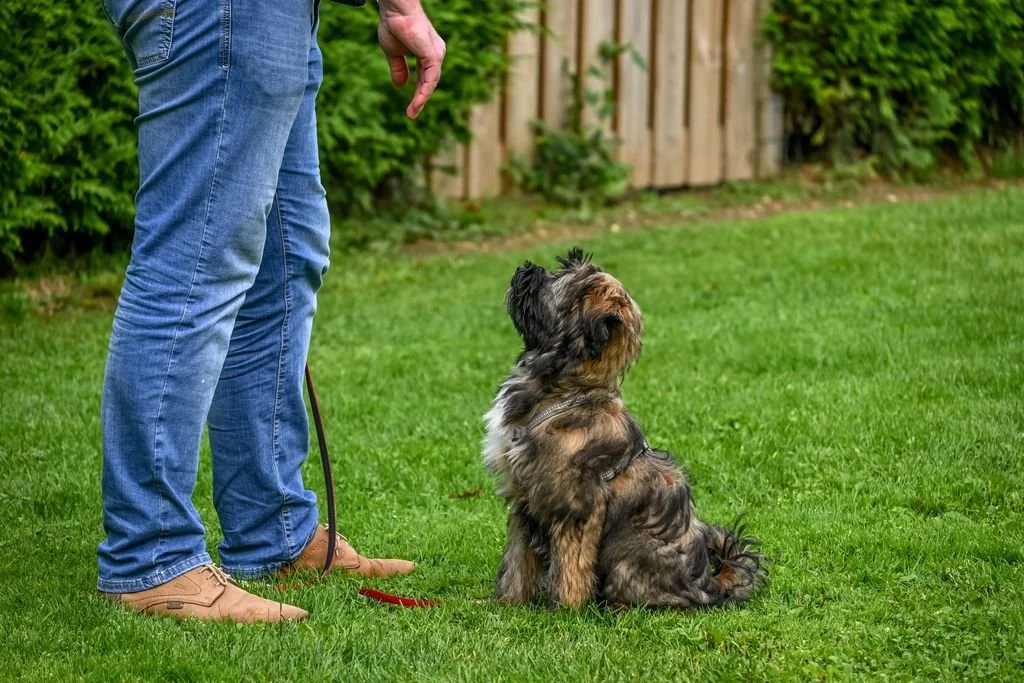
Why Does My Dog Listen at Home But Not Outside?
If your dog listens beautifully at home but seems to forget everything as soon as you step outside, distractions are probably part of the problem.
Think about the difference from your dog's perspective.
Inside your house, the environment is familiar and predictable. Outside, there are other dogs, people, traffic, squirrels, food on the ground, unfamiliar smells, noises, bicycles, delivery trucks, and countless other things competing for their attention.
For a young dog, a walk through a busy Chicago neighborhood can require far more self-control than sitting for a treat in the kitchen.
Training therefore needs to gradually move into more distracting environments. Your dog has to learn that the same expectations apply even when something more interesting is happening.

Why Adolescent Dogs Suddenly Seem to Stop Listening
Adolescence is often when owners first notice a major gap between knowing commands and having good manners.
Your puppy may have seemed easy to manage a few months ago. Now you have a bigger, stronger, more energetic dog who is increasingly interested in the world around them.
And your adolescent dog may need more practice using those skills when they are excited, distracted, frustrated, or overstimulated.
Adolescent dogs are also learning which behaviors work for them.
Jumping gets attention. Pulling gets them closer to an interesting smell. Barking gets a reaction.
Ignoring you gives them a few more seconds to keep doing whatever was already more interesting.
Dogs repeat behaviors that pay off. Part of adolescent dog training is making sure the behaviors you want become more rewarding and more familiar than the behaviors you don't.
Does My Dog Need More Obedience Training or Better Impulse Control?
Often, it is some of both.
Impulse control is your dog's ability to pause before immediately acting on what they want.
For example, your dog sees a person they love and wants to jump. They smell food and want to grab it. They see another dog and want to pull toward them.
Teaching impulse control does not mean expecting your dog to ignore everything around them. It means helping them learn that excitement does not have to lead immediately to action.
Waiting at a doorway, settling while people eat, walking without constantly pulling, staying on a placemat when someone enters the house, and checking in with you around distractions are all practical ways dogs learn self-control.
These skills make everyday life easier, and they are difficult to teach by simply adding more commands to your dog's vocabulary.
What Should You Do When Your Dog Ignores a Command?
First, resist the urge to repeat yourself over and over.
“Sit. Sit. Sit. Sit. Sit. SIT.”
If your dog routinely hears a command several times before responding, they can learn that responding the first time isn't necessary.
Instead, ask why your dog is struggling.
Is the environment too distracting? Is your dog overly excited? Have you practiced this particular behavior in this situation before? Does your dog understand what you expect?
Sometimes the answer is not to say the command louder. It is to make the situation easier and help your dog succeed before gradually increasing the difficulty.

Train the Situation, Not Just the Command
If your dog jumps on guests, practicing “sit” in an empty room will only take you so far.
Practice the actual situation.
That might include the doorbell ringing, someone entering the house, your dog staying on a mat or with you on a leash, the guest moving around, and eventually your dog being calmly released to greet them.
The same principle applies to walks, meals, doorways, furniture, greeting other dogs, and coming when called.
If you want better real-life behavior, practice the behavior in real-life situations.
Make Calm Behavior Worth Their Time
Dog owners naturally notice bad behavior.
Your dog jumps on someone? Immediate attention.
Steals your shoe? You're chasing them down the hallway.
Barks out the window? Everyone in the room reacts.
But what happens when your dog quietly lies on the floor while you're making dinner?
Usually, nothing.
Start paying attention to the behaviors you want to see more often.
Reward your dog for settling down, checking in with you, waiting, walking away from something tempting, relaxing while people move around, and choosing calm behavior in the presence of distractions.
Over time, those choices can become habits.
Use Structure Before Your Dog Makes the Wrong Choice
Training does not mean giving your dog unlimited freedom and hoping they remember what they learned in puppy class.
If your dog cannot calmly handle guests yet, don't let them charge the front door every time someone arrives.
Use a leash, crate, gate, place cot, or another appropriate management setup while you work on the behavior.
This prevents your dog from repeating the same unwanted behavior while giving you opportunities to teach them what to do instead.
Management and training work together. One prevents the behavior you don't want from becoming a stronger habit while the other builds the behavior you do want.
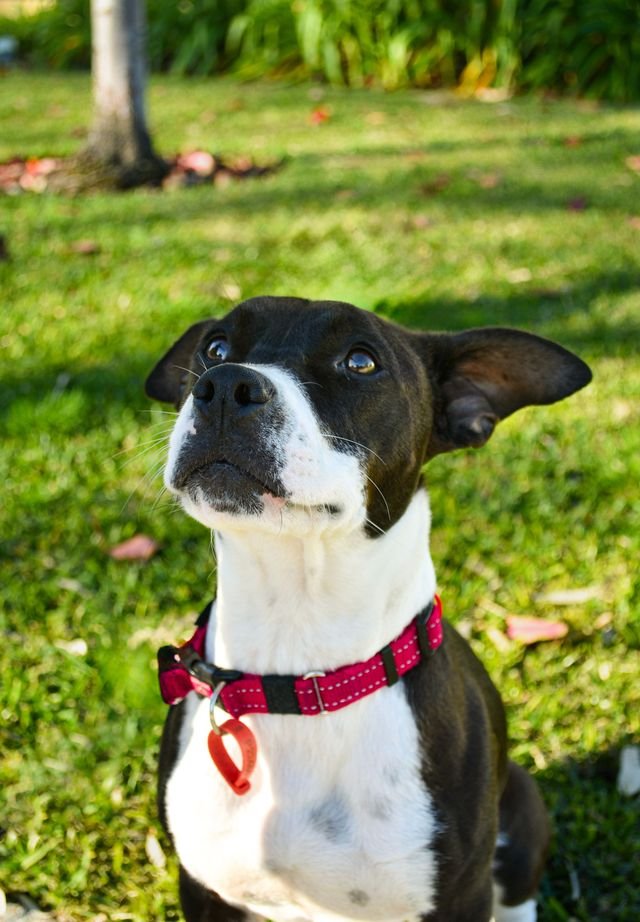
When Should You Get Help From a Dog Trainer?
You do not have to wait until your dog's behavior becomes extreme to work with a professional trainer.
Consider getting help if your dog:
Knows commands at home but regularly ignores them elsewhere
Pulls or lunges on walks
Jumps excessively on guests
Cannot settle around people or activity
Becomes overly excited or distracted around other dogs
Has difficulty coming when called
Seems to understand what you want but cannot consistently do it
Is becoming harder to manage as they move through adolescence
A professional trainer can help identify whether the missing piece is training, impulse control, environmental management, clearer expectations, or simply more practice in realistic situations.
Adolescent Dog Training in Chicago
At Canine Sports Dog Training, we work with adolescent and young adult dogs who know some things but cannot quite hold it together when life gets exciting.
Our training focuses on practical skills that make everyday life with your dog easier — walking politely, greeting people appropriately, settling around activity, responding around distractions, and learning what to do without constant micromanagement.
Because ultimately, the goal isn't a dog who can perform a long list of commands in your living room.
It's a dog who can use those skills when you're actually living your life together.
If your dog knows sit but still acts like a maniac, we can help build the missing layer.
Contact Canine Sports Dog Training to learn more about adolescent dog training in Chicago.
Frequently Asked Questions About Dogs Who Don't Listen
Why does my dog know commands but not listen?
Dogs often learn commands in specific environments and have difficulty performing them around distractions or when excited. Your dog may understand the command but need additional practice using it in different places and situations.
Why does my dog listen inside but not outside?
The outside environment contains far more distractions, including people, dogs, wildlife, traffic, sounds, and smells. Dogs need gradual training around distractions before they can reliably perform the same behaviors they know at home.
Do adolescent dogs forget their training?
Usually, no. Adolescence can make previously learned behaviors less reliable because dogs become stronger, more energetic, more independent, and more interested in their surroundings. Continued training helps them learn to use their existing skills in increasingly challenging situations.
How can I improve my dog's impulse control?
Practice behaviors that require your dog to pause, wait, settle, or check in with you before getting something they want. Examples include waiting at doors, calmly greeting people, settling during meals, and walking politely around distractions. Difficulty should be increased gradually so your dog can succeed.
Should I repeat a command if my dog doesn't listen?
Repeatedly saying the same command can teach your dog that they do not need to respond the first time. Instead, consider whether the situation is too difficult or distracting and help your dog succeed at an easier level before trying again.
When should I hire a professional dog trainer?
Professional training can help when your dog understands basic commands but continues to struggle with everyday behaviors such as pulling, jumping, settling, greeting people, recall, or responding around distractions. You do not need to wait for these behaviors to become severe before seeking help.